

Did You Know
Silent Sips Beneath the Rain.
Sanjay Mohindroo
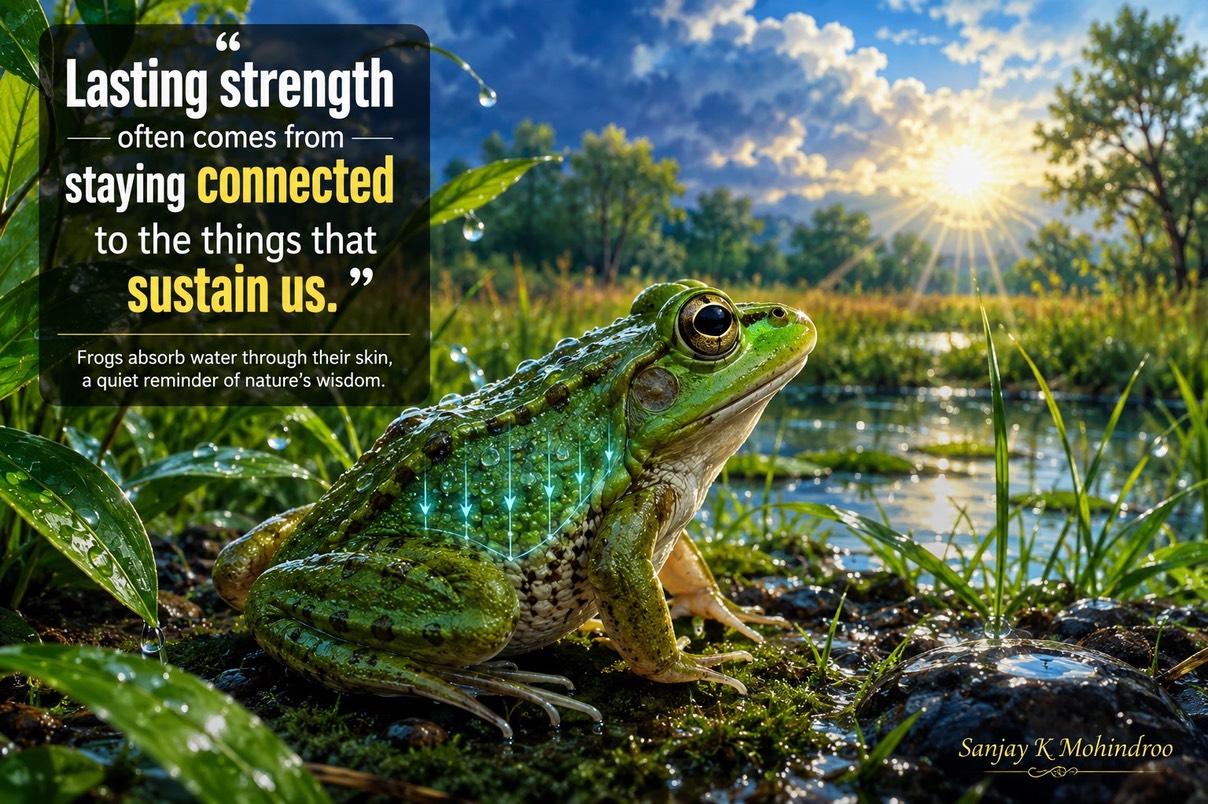
A simple frog reveals a remarkable lesson through the quiet way it absorbs water through its skin.
A summer rain had just passed.
The ground glistened. Leaves held tiny drops of water. Near a pond, a small frog sat still among the wet grass. It looked calm, almost unnoticed.
Then came a surprising fact.
That frog was not drinking water the way most animals do. It was absorbing water through its skin.
A simple detail, yet one that changes the way we see these remarkable creatures.
Nature’s Living Sponge
A Body Built for Balance
The frog remained motionless while the soil around it stayed damp.
At first glance, nothing seemed unusual. Yet its body was doing important work. Frogs have special skin that allows water to pass directly into their bodies. Instead of relying mainly on drinking, they take in moisture through their skin.
Many frogs even have an area on their underside called a "drinking patch." This part absorbs water quickly when it touches wet surfaces.
This ability helps frogs stay hydrated in places where standing water may be scarce.
#Frogs #NatureFacts
A Quiet Skill That Shapes Survival
Strength Hidden in Simplicity
Imagine spending a day in a forest after rain.
Streams shift. Puddles dry. Conditions change fast.
For many animals, finding water becomes a constant task. Frogs use a different approach. Their skin turns the environment itself into a source of hydration.
This skill gives them flexibility. It helps them move between ponds, wetlands, and damp forests with less dependence on direct drinking.
The lesson is simple.
Sometimes success comes from adapting to conditions rather than fighting them.
#Wildlife #Adaptation
Skin That Connects Life and Environment
Every Surface Tells a Story
The frog beside the pond seemed connected to everything around it.
That connection is real.
Because frogs absorb water through their skin, they remain closely tied to the health of their surroundings. Clean water and healthy habitats matter deeply to their survival.
Pollution can affect them quickly. Changes in moisture can affect them quickly as well.
Scientists often view frogs as signs of environmental health. When frog populations struggle, it can signal larger problems in local ecosystems.
A small animal becomes a messenger for an entire habitat.
#Environment #Conservation
A Lesson Beneath Every Raindrop
Small Creatures, Big Reminders
As evening approached, the frog slipped quietly into the grass.
Nothing dramatic happened.
Yet its story stayed behind.
A creature no larger than a hand carries a remarkable design. Through skin that absorbs water, frogs show the power of working with nature rather than against it.
Their survival depends on connection, balance, and awareness of the environment around them.
Those qualities matter far beyond a pond.
They remind us that lasting strength often comes from staying connected to the things that sustain us.
The next time rain falls, take a closer look at the ground beneath your feet.
Somewhere nearby, a frog may be resting in silence, drawing life through its skin. That simple act reflects one of nature's most elegant solutions.
Frogs absorb water through their skin, but they also offer a deeper reminder. True strength is not always loud. Sometimes it appears in quiet adaptation, steady balance, and a close bond with the environment that supports life.
#Frogs #NatureFacts #Wildlife #Amphibians #Environment #Conservation #NatureEducation #AnimalFacts #Wetlands #Biodiversity
Eight Muscles, One Remarkable Story.

Sanjay Mohindroo
The human tongue contains eight muscles working in harmony, shaping speech, taste, and connection every day.
A child speaks their first word. A singer holds a perfect note. A friend shares a kind sentence at the right moment.
Most people never stop to think about the small organ behind each of those moments. Yet the human tongue performs these tasks with stunning skill. Hidden in plain sight, it relies on eight different muscles working together every second.
That fact sounds simple at first. The story behind it is anything but.
A Silent Team at Work
Eight Muscles, One Purpose
Picture an orchestra before a concert. Each musician plays a different part, yet every sound must blend into one piece.
The tongue works much the same way.
Eight separate muscles make up the human tongue. Four sit within the tongue itself. Four connect it to nearby structures. Together, they twist, stretch, lift, shorten, and shape the tongue with great control.
Most muscles in the body move a joint or pull a bone. The tongue follows different rules. It creates movement by changing its own shape.
That ability gives humans a level of control few animals possess.
The next time you say your name, every muscle joins the performance.
The Conversation Behind Every Conversation
Speech Built Through Precision
A casual chat over coffee feels effortless.
Yet every spoken sentence depends on exact movements happening in fractions of a second.
The tongue shifts position hundreds of times during normal speech. It touches the teeth, presses against the roof of the mouth, and changes shape to form sounds.
Without that control, language would become slow and unclear.
Researchers often point to the brain when discussing communication. The brain deserves credit, but the tongue deserves attention too. Thoughts become words only when muscles bring them to life.
That simple truth changes the way we view human connection.
#Communication #HumanBody
More Than Taste Alone
A Daily Partner in Survival
Many people link the tongue only with taste.
Taste matters, but the tongue carries a much larger role.
During every meal, it moves food across the mouth and prepares it for swallowing. It helps keep breathing and eating in balance. It works continuously without demanding attention.
Most days pass without anyone thanking their tongue for the effort.
Then a sore throat or mouth injury arrives. Suddenly, speaking, eating, and swallowing feel difficult.
Those moments reveal a lesson. We often notice our most important tools only when they struggle.
A Small Organ with a Big Message
Strength Through Coordination
The beauty of the tongue does not come from a single muscle.
Its strength comes from cooperation.
Eight muscles combine their efforts to create one smooth action. No muscle seeks attention. No muscle works alone. Each contributes to a shared goal.
There is a valuable lesson in that design.
Many achievements appear simple on the surface. A speech, a song, a conversation, or a smile can seem effortless. Behind each moment stands a network of parts working together.
Nature reminds us that excellence rarely comes from one source.
It grows from teamwork.
#HumanAnatomy #ScienceFacts
The human tongue may seem ordinary, yet it tells an extraordinary story.
Eight different muscles work together to help us speak, eat, sing, laugh, and connect with others. They perform thousands of movements each day without applause or recognition.
That quiet partnership carries a message worth remembering.
Some of the most important things in life work behind the scenes. They do not seek attention. They simply do their job with care and precision.
The tongue is one of those wonders.
And every word we speak is proof.
#HumanBody #HumanAnatomy #ScienceFacts #HealthEducation #Communication #MedicalFacts #Biology #Learning #Knowledge #Wellness
When the Sky Holds the Power of 10,000 Nuclear Bombs.

Sanjay Mohindroo
A hurricane carries energy beyond imagination, revealing both nature’s power and humanity’s need for respect.
A satellite image can look calm at first glance.
A swirl of clouds drifts across the ocean. The shape is almost beautiful. Then the numbers appear. Wind speeds climb. Pressure falls. Emergency alerts spread across towns and cities.
In that moment, the image becomes something else.
A single hurricane can release energy equal to roughly 10,000 nuclear bombs every day. That fact sounds impossible. Yet it offers a powerful lesson about the forces that shape our planet.
A Giant Awakens
Calm Waters, Rising Power
Far from shore, warm ocean water feeds a growing storm.
At first, few people notice. Ships change course. Weather teams track new data. The sea keeps giving heat to the atmosphere. That heat becomes fuel.
The storm grows stronger with every passing hour.
By the time a hurricane reaches full strength, it has become one of nature's largest engines. It draws energy from warm water and converts it into powerful winds, towering clouds, and endless rain.
The scale is hard to grasp.
Many people think of a nuclear bomb as the peak of destructive power. Yet a hurricane releases far more energy over time. It does not do so in a single flash. It builds, moves, and endures.
That steady release makes it both fascinating and frightening.
Energy Beyond Human Creation
A Comparison That Changes Perspective
Imagine standing on a beach before sunrise.
The waves seem ordinary. The breeze feels gentle. Nothing suggests that a massive force is gathering offshore.
Yet deep within the storm, nature is performing work on a scale humans cannot match.
Scientists estimate that the heat energy released by a mature hurricane can equal thousands of nuclear explosions each day. The comparison is not meant to create fear. It serves as a reminder of the immense power stored within Earth's natural systems.
Human engineering has achieved remarkable things. We have built cities, bridges, aircraft, and power stations.
Still, hurricanes remind us that nature operates on a different scale.
That realization often changes the conversation from control to respect.
Lessons Written in Wind and Rain
Strength Meets Humility
Communities that face hurricanes often share a common story.
People prepare their homes. Emergency teams work around the clock. Neighbors help neighbors. Families check on loved ones.
The storm may test buildings, roads, and power lines.
It also reveals something else.
Human cooperation becomes visible during difficult moments. Acts of kindness appear in places that rarely make headlines. Recovery begins even before the clouds clear.
The hurricane's power shows our limits.
Our response shows our character.
That balance matters. Respect for nature does not mean helplessness. It means planning wisely, building smarter, and taking science seriously.
A Future Built on Awareness
Knowledge as a Source of Strength
Weather forecasting has improved greatly over recent decades.
Today, satellites, aircraft, and advanced computer models provide earlier warnings than ever before. Millions of people receive alerts that help save lives.
That progress offers hope.
Each hurricane teaches scientists more about storm behavior, climate patterns, and risk management. Every lesson improves future preparation.
The goal is not to defeat nature.
The goal is to live alongside it with greater understanding.
As climate discussions continue across the globe, hurricanes remain a powerful symbol. They remind us that the atmosphere, oceans, and weather systems are deeply connected.
Small changes can influence very large outcomes.
#ClimateScience #HurricaneSeason #WeatherAwareness
A hurricane carrying the energy of 10,000 nuclear bombs is more than a striking statistic.
It is a reminder of the extraordinary forces at work above and around us every day.
The story of a hurricane is not only about wind and rain. It is about respect, preparation, science, and human unity.
When we look at those swirling clouds from space, we are seeing more than a storm.
We are witnessing one of nature's greatest displays of power, and a lesson in humility that remains as relevant as ever.
#Hurricane #ClimateScience #ExtremeWeather #WeatherAwareness #ClimateAwareness #Storms #Nature #Science #Environment #NaturalDisasters
The Purple Past Hidden Beneath Every Orange Carrot.
Sanjay Mohindroo
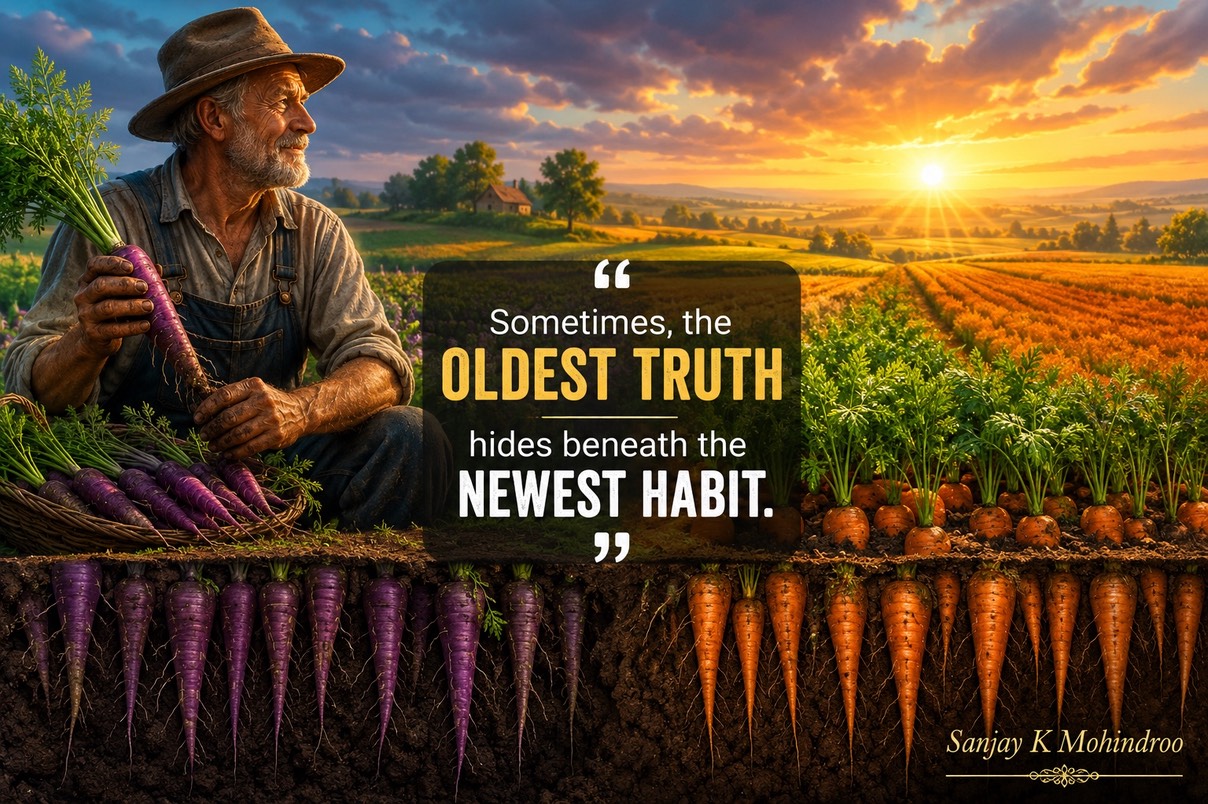
The carrot’s first color was purple, not orange. A simple root reveals a powerful lesson about change and perception.
Picture a busy market over a thousand years ago.
Farmers spread fresh produce across wooden stalls. Baskets overflowed with grains, herbs, and roots. Among them sat carrots. Yet these carrots looked nothing like the bright orange ones we know today.
They were deep purple.
That small detail tells a larger story about nature, choice, and the way people shape the things around them.
A Forgotten Shade
Ancient Roots Beneath the Soil
Most people grow up thinking carrots have always been orange.
The truth is far more interesting.
Early carrots were often purple, though some came in yellow and white shades. Farmers first grew them in parts of Central Asia long before modern farming took shape. Their rich color came from natural plant compounds that still attract interest today.
For centuries, purple carrots were the familiar sight. They fed families, traveled trade routes, and became part of local food traditions.
Yet change was waiting beneath the surface.
A Color That Changed History
Fields Guided by Human Choice
As farming spread across regions, growers began selecting plants with traits they preferred.
Some wanted sweeter roots. Others wanted smoother shapes or stronger harvests.
Over time, orange carrots gained attention. Farmers continued breeding them until the color became common across large parts of Europe.
The shift did not happen overnight.
Generation after generation, people made small choices. Those choices slowly changed the look of a crop known across continents.
The orange carrot was not an accident. It was the result of patience, observation, and human effort.
A Lesson Beyond Agriculture
Perception Shapes Reality
Walk into any grocery store today.
Rows of orange carrots seem normal. Few shoppers stop to question their color. The orange version feels permanent because it is familiar.
Yet history tells another story.
Purple carrots remind us that many things we accept as fixed were once very different. Customs change. Products change. Even the foods on our plates change.
That idea carries value beyond farming.
People often assume the current version of something is the original version. The carrot proves otherwise.
Sometimes the oldest truth hides beneath the newest habit.
Purple Returns to the Table
Old Varieties Finding New Fans
In recent years, purple carrots have made a quiet return.
Farmers, chefs, and home gardeners have shown fresh interest in older crop varieties. Markets now offer colorful carrots that stand out beside their orange relatives.
The appeal goes beyond appearance.
Purple carrots connect people to agricultural history. They offer a glimpse into the long path that food travels before reaching our kitchens.
Every purple carrot carries a small reminder that progress does not always mean replacing the past. Sometimes it means remembering it.
#PurpleCarrots #FoodHistory #Agriculture #HealthyEating
The story of the carrot begins with a color many people never expect.
Purple carrots once filled fields long before orange carrots became common. Their journey shows the power of steady change and human choice.
The next time a bright orange carrot lands on your plate, pause for a moment.
Beneath that familiar color sits a rich history. It is proof that even ordinary things can carry extraordinary stories.
And sometimes, the most surprising lessons grow quietly underground.
#PurpleCarrots #FoodHistory #Agriculture #HealthyEating #Farming #FoodFacts #HistoryOfFood #Nature #FreshProduce #Learning